


September 19, 2026
5 min

5 min
Reading


By Chris Demaillet, Michelin-trained at The Waterside Inn under Michel Roux OBE. Former private chef to Amancio Ortega. Founder of Montclair Chef.
Every week, we review applications from private chefs who want to be placed through Montclair Chef. Most never make it onto our shortlist. The reasons are not what most family offices assume.
Resume polish, photography quality, even the level of culinary training matters less than five specific signals. These are the patterns that, in our experience, predict whether a chef will succeed in a UHNW household or fail within the first year.
I am sharing them publicly because family offices and estate managers sometimes hire directly, and the same red flags apply whether you use an agency or not. If you spot any of these in a candidate, slow down before you sign.
This is the fastest way a chef gets cut from our shortlist. We look at every candidate's social media before we even open their CV.
If their Instagram shows photos taken inside a client's kitchen, even partially, with anything identifying the location, the candidate is finished. The same applies if they tag locations near a client's residence, share photos of a yacht with the name visible, or post images of food on dinnerware that any wealthy collector would recognize.
I once saw a private chef post a series of stories from what was clearly the interior of his principal's home. About a week later, he contacted me looking for a new role. He had been with the family for one month.
The damage is not just the post. It is the question the principal asks themselves: what else has this person shared, and what might they share next? Once that question enters the room, the placement is over. We screen for this so our families never have to.
Many chefs list "Michelin-trained" on their CV. Most are stretching the truth.
A two-week stage at a Michelin-starred restaurant is not Michelin training. Working in a kitchen that lost its star three years before the candidate arrived is not Michelin training. Working under a chef who once held a star at a previous restaurant is not Michelin training.
Michelin training, in the meaningful sense, means full-time employment in a kitchen with a current Michelin star, under a chef who holds the star at the time of employment, for a period long enough to learn the discipline. We verify this directly with the restaurant and the chef. It takes 60 seconds. Roughly one in three candidates who list "Michelin-trained" on their CV does not survive that 60 seconds.
This is not a hanging offense in itself. We have placed exceptional chefs with no Michelin background. The red flag is the willingness to misrepresent. If a candidate inflates a Michelin claim on their CV, they will inflate other things to the principal.
A chef who has worked for three different UHNW families in 24 months is telling us something, whether they intend to or not.
There are legitimate reasons. A family relocates and reduces staff. A principal passes away. A child grows up and the household downsizes. These happen, and we hear them out.
What we look for is the pattern. If every previous role ended for "external reasons," and the candidate cannot articulate any role they played in the dynamic, the placement risk is high. UHNW households are intense environments. Chefs who succeed in them stay an average of three to seven years per role. Chefs who churn through families in 6 to 9 month cycles usually carry a pattern of behavior we cannot afford to introduce into our clients' homes.
The fix is honest conversation. Candidates who can describe what they learned from a short placement, and what they would do differently, often become our strongest placements. Candidates who blame every family for the same problem are not making our shortlist.
When we ask a candidate why they left their previous role, the answer matters more than the role itself.
A confident, specific, professional answer signals self-awareness. "The principal's children were growing up and the household no longer needed a full-time chef. We parted on good terms and they wrote me a strong reference." That is a complete answer.
A vague answer signals something hidden. "It just wasn't the right fit." "We had creative differences." "The family decided to make a change." These responses can be true. They can also be cover for a termination the candidate does not want to discuss.
We always reach out to the previous employer with the candidate's permission. The strongest candidates encourage it. The weakest avoid it. That signal alone is often enough to make the call.
This one I have seen end more placements than the other four combined.
A chef who walks into a new client's kitchen and starts reorganizing within the first week is telling the family: my standards matter more than your home. Even if the kitchen needs reorganizing. Even if the chef is right about the layout. Even if the previous chef left it badly.
The principal is not paying for an upgrade to their kitchen. They are paying for a chef who can work within their environment, respect what is there, and earn the right to suggest changes later. Maybe much later.
Candidates who pass this test in our cooking trials are the ones we put forward. They use what is there, leave the kitchen cleaner than they found it, and never reorganize a single drawer without asking. The candidates who fail this test reveal something deeper: they do not yet understand that a private chef serves the household, not the other way around.
If you are vetting a chef yourself, the five questions that surface these red flags are:
None of these questions need to be confrontational. The strongest candidates welcome them. The candidates you should not hire often deflect, deflect, deflect.
Vetting is not paperwork. It is pattern recognition built from years inside this world. We do it before any candidate reaches our shortlist, so our families never see the chefs who would have failed. That is the work we do every week.
If you are bringing on a private chef and want a second pair of eyes on the candidates you are considering, or want a shortlist that has already passed every red flag check, the conversation starts with a brief on your household.
Chris Demaillet spent over 20 years in private service before founding Montclair Chef. He trained under Michel Roux OBE at The Waterside Inn in Bray and served as private chef to Amancio Ortega, founder of the Inditex Group, for nearly a decade. Montclair Chef places full-time private chefs with UHNW families, family offices, and estates worldwide. Read Chris's full story or schedule a confidential consultation.

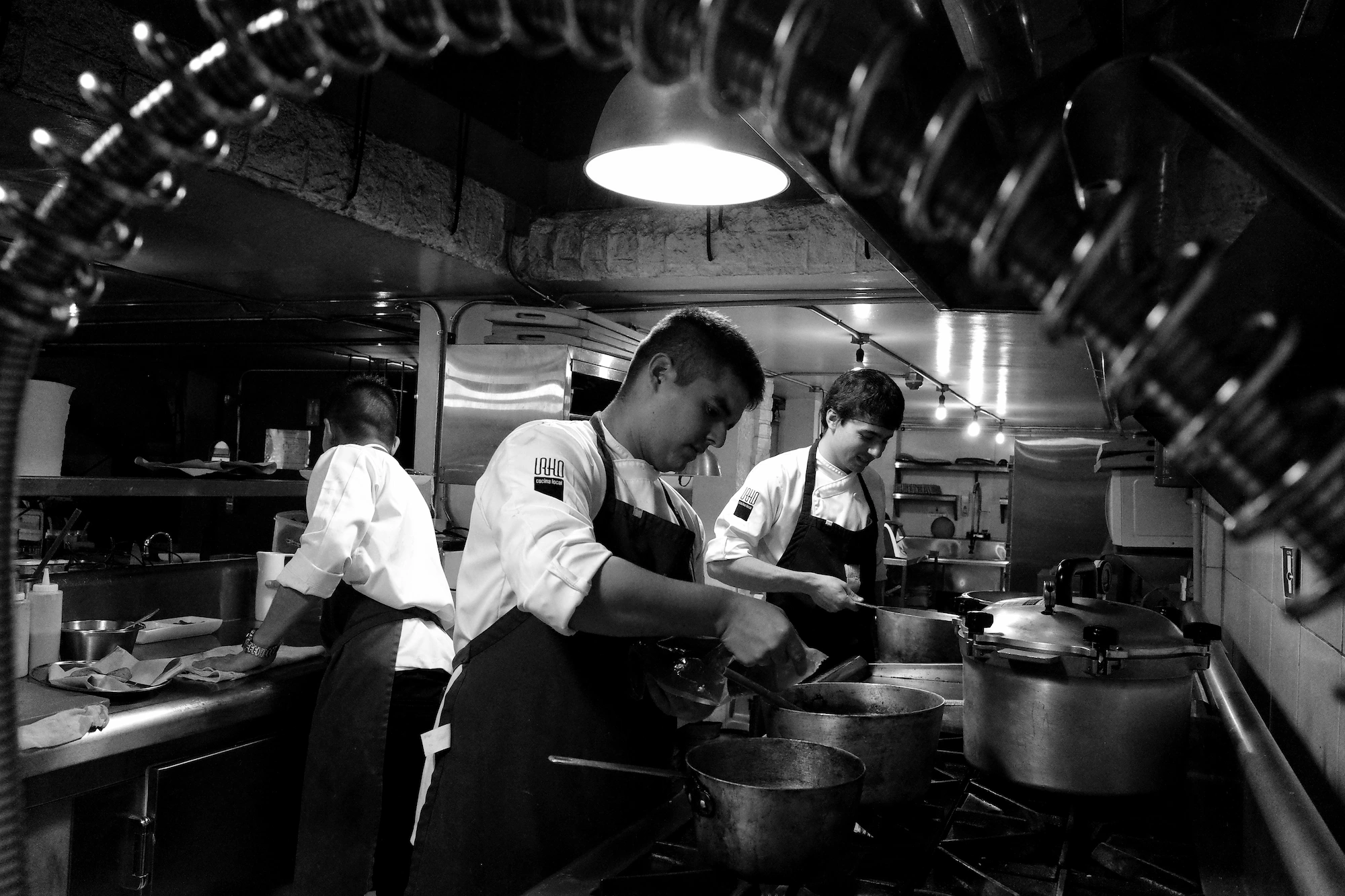
Can you hire a chef from your favourite restaurant or a Michelin-starred kitchen as your private chef? Yes, here is what it really takes to make it work.
After 15 years running the world's largest private chef communities, here is how we reach the best chefs.
Resume gaps, Michelin claims that don't hold up, three families in two years, social media leaks. Five red flags that disqualify a private chef candidate.
Our expertise lies in understanding the unique needs of UHNW households and lifestyles. If you are ready to explore how a dedicated culinary professional can elevate your experience, we invite you to contact us for a confidential consultation.
Headquartered in Palma de Mallorca. Placing Michelin-trained private chefs in UHNW homes across the United States, United Kingdom and Europe.
US: +1 917 924 4599
© 2026 Montclair Chef