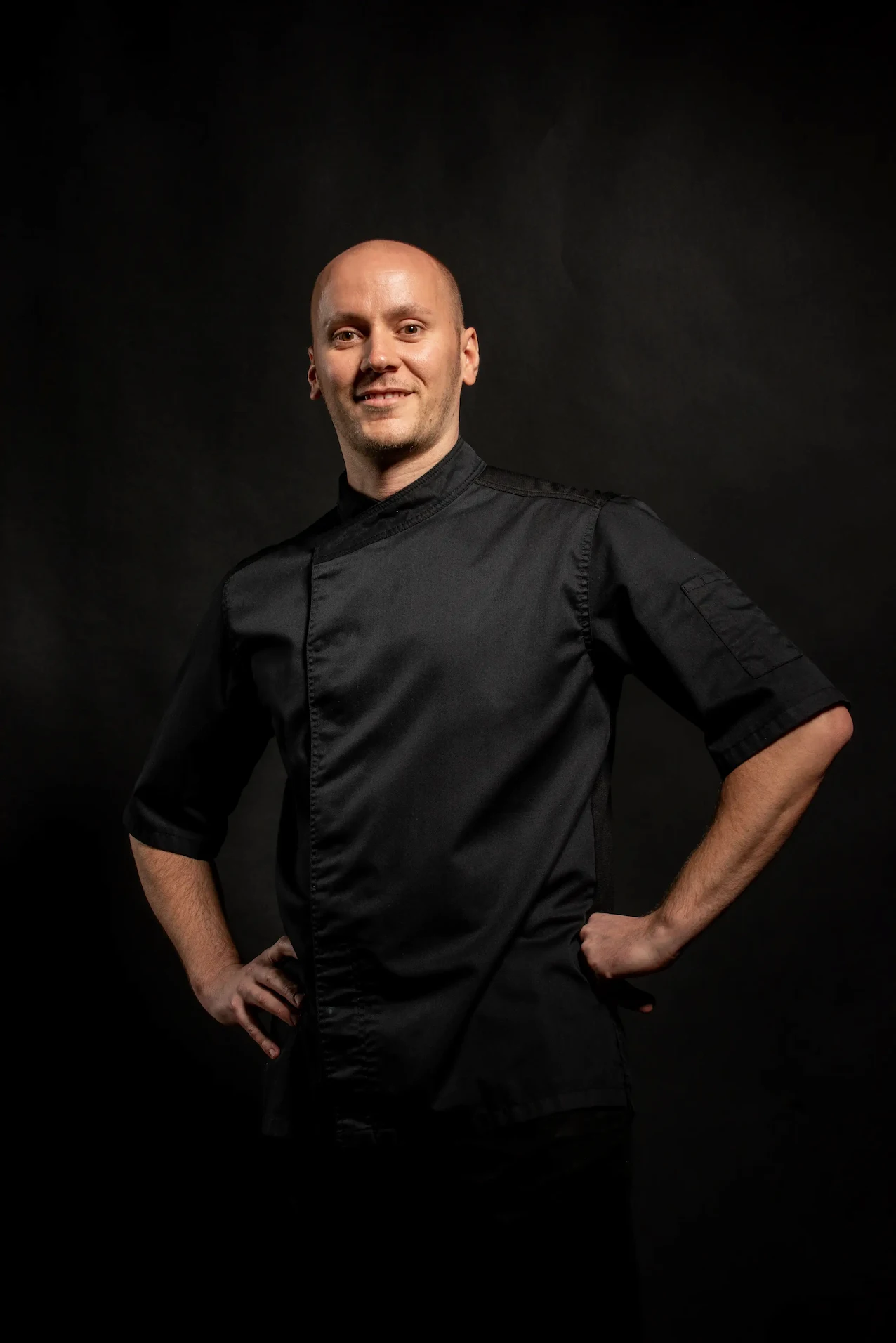
After 25 years, three Michelin kitchens, Atlantic crossings, Greek island summers, and nearly a decade in the service of one of Europe's most recognised business figures, this is what I actually learned.
There is a moment every private chef knows. The principal has just decided, without warning, to go for a swim. You are in the middle of the Greek islands. It is 40 degrees. The fish is on. The sauce is reducing. Service was in twelve minutes.
You adjust. You always adjust. That is the job.
I spent 25 years adjusting. As a Michelin-trained chef, as a superyacht chef crossing the Mediterranean and the Atlantic, as a full-time private chef to billionaires and some of the most prominent families in the world, including nearly a decade in the service of one of Europe's most recognised business figures, and eventually as the founder of Montclair Chef, a private chef placement agency built entirely on what I learned in those kitchens.
This is what I learned.
Being a great chef has almost nothing to do with cooking
That sounds like a provocation. It isn't. The cooking is the baseline. By the time you are operating at the level of full-time private service for a UHNW family, your technical ability is assumed. What separates the chefs who last from the ones who don't is everything else.
It is the willingness to learn constantly, not because someone asked you to, but because the standard demands it. Whether that means perfecting a consommé until the broth runs completely clear, like glass in a bowl, or deciding that the croissants you are serving are no longer good enough.
I remember standing in a galley kitchen on a superyacht, making exactly that decision. The croissants were part-baked, from a respected French industrial bakery. Technically fine. But I had watched the owner eat them, and I knew. I started making them from scratch, laminating the dough myself, in a kitchen that moved with the sea, because flaky, buttery, fresh pastry made by hand is a different thing entirely from something that began its life in a factory. The owner noticed. He didn't say much. He didn't need to.
That is also the job.
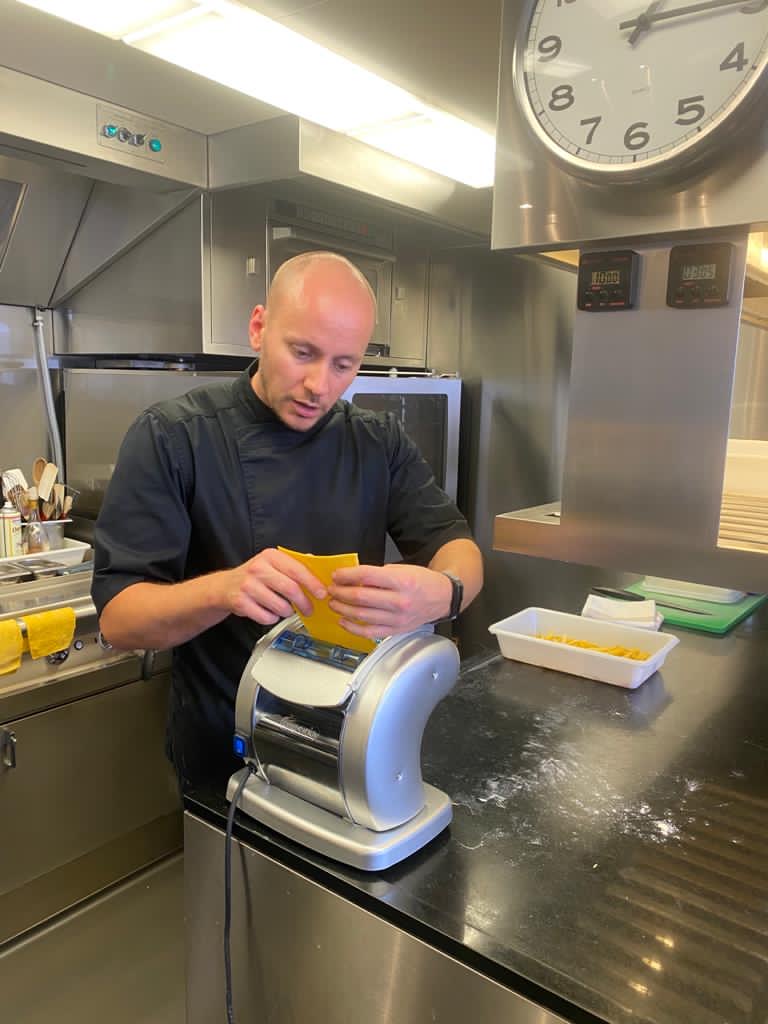
The best function as a traveling private chef in the truest sense: they travel ahead, arriving 24 hours before the family, sourcing the finest local organic produce, mapping the nearest specialist suppliers. If the principal or a family member has a gluten intolerance, they will have de-glutenised the entire rental property before the family walks through the door: every surface wiped, every cupboard checked and cleared, every trace of cross-contamination removed from a kitchen they have never cooked in before. They do this quietly, without being asked, because they understood the brief well enough to anticipate it. That level of service is not taught in culinary school. It is a disposition, and it is exactly what separates a great estate chef from a great restaurant chef who happens to work in a home.
"The chefs who last are the ones who find something sustaining in the invisibility of it. The work is exceptional. The recognition is almost entirely private."
The pressure no one talks about
Private chef service at the highest level means being judged between three and six times a day. Breakfast, lunch, dinner for the family. A separate service for the children. Canapés. Each one a verdict.
There is no brigade to absorb the anxiety. No head chef to defer to, no pastry section to hand off dessert. It is you, your mise en place, and the silent question hanging over every plate: is this good enough?
My teeth are short. I ground them in my sleep for years, not during service, not during the day, but at night, unconsciously, while my body was supposed to be resting. The stress didn't stop when the kitchen closed. It followed me to bed: nightmares of not being ready, of running out of the sauce the principal preferred, of ingredients arriving in the wrong condition. My jaw was processing what my mind refused to put down.
The potatoes explain this best. The principal I served for nearly a decade had a preference for a specific variety, flown in from France on the private jet, packed in Styrofoam-insulated boxes. My anxiety was not just about cooking them correctly. It was about the humidity inside the box during the flight, whether the supplier had dried them properly before packing, whether three weeks of consecutive service could be built on what arrived. Too much moisture in that box and the quality would begin to shift within days, not mouldy, just subtly wrong. And you cannot make a perfect pomme purée from the wrong potato.
You can be a technically brilliant chef and still fail because of a poorly sealed box at 35,000 feet. That is the reality of private service. Many of the variables that determine success are entirely outside your control.
The principal going for a swim is the most human version of this. He had spent decades building one of the great European companies. If he wanted to swim in the Aegean at noon on a Tuesday, he should swim. That is the correct order of things. What it meant for me was a reorganised service, a recalculated timing, a sauce held and restarted, and the same standard on the plate regardless. No explanation on arrival. No mention of the adjustment. Just the food, at the right temperature, at the right moment.
You learn to hold two things simultaneously: the knowledge that almost nothing is within your control, and the absolute refusal to let that show on the plate.
The families
Over nearly two decades I cooked for families I am not able to name, some of the most recognisable figures in global technology, finance, and industry. One placement lasted nine years. That relationship, more than any other, shaped my understanding of what genuine private chef service demands: not just cooking, but presence, discretion, and an almost invisible consistency that becomes part of the rhythm of a household.
These families could eat anywhere in the world, prepared by anyone in the world. The reason a billionaire family employs a private chef full-time is not convenience. It is trust. They are inviting someone into the most private theatre of their lives, the family table, and they need to know that person will hold that trust absolutely, regardless of what they witness, what they overhear, or what they are asked to manage at short notice.
I think of one owner, a 60-metre-plus superyacht, a man who had built something extraordinary in his life. He told me once, with complete sincerity, that the boat was the only place in the world where he could take his shoes off and not put them back on for three weeks. Not a metaphor. Literally: three weeks without shoes. He said most people couldn't understand why that mattered so much to him. I understood immediately. When you have lived at that level of responsibility, of visibility, of obligation to others, three weeks of bare feet on teak is not a small thing. It is freedom in the only form that still feels real.
The same man, for all the grandeur of the vessel, was not a strong swimmer. When he went in the water, which wasn't often, he wore a small flotation aid. Quietly, without fuss. He'd dip in and out, enjoy the sea the way he wanted to, and come back aboard. No one made anything of it. That is also part of the job: knowing what you know, holding it with complete discretion, and letting people be exactly who they are without commentary.
I am not telling you who this person was. It doesn't matter. What matters is that this is the kind of detail you come to know as a private chef, not from a newspaper, not from a profile, but from proximity. From months aboard the same vessel, from three services a day, from learning someone's rhythms so well that you begin to understand them in ways their colleagues and business partners never will. You are not their advisor. You are not their confidant in any formal sense. But you are hyper-present in the part of their life that is most human, the part where they eat, rest, travel, and finally, for a few weeks a year, take their shoes off. That proximity is a privilege. The chefs who understand that tend to stay for years. The ones who don't rarely last a season.
That trust is the career. Everything else is technique.
Why so many talented chefs fail at this level
The transition from restaurant to private chef for ultra-high-net-worth families breaks chefs who should, by every technical measure, succeed.
The brigade is gone. In a restaurant kitchen you have structure, hierarchy, colleagues. In private service you are alone with your craft and your principal's expectations. The chefs who struggle are almost always the ones who were borrowing confidence from the environment, from the brigade, from the theatre of a professional kitchen, from the validation of a head chef. Remove all of that and what remains is just you, your ability, and your relationship with the work itself.
There is also the intimacy problem. You are not serving guests who booked a table and will leave after two hours. You are inside someone's home, their vessel, their life. You see everything, the family dynamic, the moods, the rhythms of a household. You must hold all of it and make none of it your business. Discretion is not a virtue in this profession. It is a technical requirement, as fundamental as knife skills.
"If you need the room to know you cooked the meal, this is not the right profession."
Why I started Montclair Chef
After nearly a decade in one placement, and 25 years across this profession in total, I understood something clearly enough to build a business on it: the families who need private chef service at the highest level are not being well served by the current market.
Most agencies place restaurant chefs into private homes and call it private chef placement for UHNW families. The chef arrives technically capable and emotionally unprepared. The family endures a difficult adjustment period or ends the placement within a year. The process begins again.
I started Montclair Chef because I had been on both sides of that problem. I knew what the principals needed because I had served them. I knew what the chefs needed because I had been one. Full-time placement only, no events, no short-term, no compromise on the standard. Every chef we place has been assessed not just on their cooking but on their understanding of what private service actually is.
From private service to private chef placement
After years inside private households, I saw that the hardest part for families was not finding a good cook. It was finding a private chef who could live inside the rhythm of a UHNW household, travel discreetly, manage pressure, understand privacy, and stay consistent over time.
That experience is why Montclair Chef focuses on discreet private chef placement for families who need more than a restaurant résumé. We place across every major wealth market, from New York and London to Monaco and the Mediterranean, with the same standard at every property.
For the chefs reading this
Two weeks ago I published a guide for chefs who want to take this path seriously. Not a recipe collection or a credential checklist, a genuine account of what full-time private chef service demands and how to prepare for it. It is the resource I wish had existed when I started. If your path leads to superyachts specifically, I have written a separate guide for that world too, a profession with its own particular demands, rhythms, and standards that no culinary school prepares you for. Both are available on Amazon: The Private Chef Guide and The Yacht Chef Guide.
The work is extraordinary. The life it gives you as a private chef for UHNW families, inside the most remarkable households in the world, trusted with the daily sustenance of families who could have anything, is unlike any other career in food. But it will ask everything of you: your sleep, your stress tolerance, your ego, your need for recognition.
My teeth are short. I would do it again.
What cannot be copied
I am aware that competitors copy this website. The layout, the wording, the structure of our application form, the tone of our social content, I have seen all of it replicated, sometimes almost word for word. I take it as a compliment. Imitation is a form of acknowledgement, and I understand that.
But here is what they will never copy.
They will not copy the years I spent in three-Michelin-star kitchens, where the margin for imperfection was zero and the standard was reset every single day. They will not copy the nearly decade I spent cooking privately for one of the most successful businessmen in European history, learning what genuine service at that level actually demands. They will not copy the relationships I have built over years with the chefs we represent, conversations, trust, and understanding that accumulates over hundreds of hours and cannot be manufactured overnight. They will not copy the fact that when I assess a chef for placement, I am not reading a CV against a checklist. I am drawing on 25 years of having done the job myself, at the highest level it can be done.
My story is not a marketing asset. It is a professional history, and it is not transferable. Hundreds of thousands of hours in kitchens, on yachts, in private residences across the world, in the service of families who trusted me completely. That is what Montclair Chef is built on. You cannot replicate it by copying a webpage.
What you get from Montclair Chef is not a placement service that looks the part. It is someone who has lived this profession from the inside, who is genuinely passionate about the standard, and who will work harder than anyone else in this industry, for the chefs we represent, for the families we serve, and for the integrity of every placement we make. That has always been true. It will always be true. And it is entirely ours.
The Private Chef Guide