


September 19, 2026
7 min.

7 min.
Reading


Written by Chris Demaillet, Founder of Montclair Chef. In April 2026, I joined Dr. Stephan Shipe on the Scholar Wealth Podcast to talk about what really happens when UHNW families hire a private chef. Here's what came out of that conversation.
In April 2026, I was a guest on the Scholar Wealth Podcast, hosted by Dr. Stephan Shipe, PhD, CFA, CFP, founder of Scholar Financial Advising and a financial educator whose work has been featured in Forbes, Bloomberg, Barron's, and Kiplinger.
The audience for that podcast is exactly the audience I care about reaching. Wealth advisors, family office professionals, and the principals they support. People making real staffing decisions for complex households, often with limited visibility into how the placement market actually works.
What follows is what I told Stephan, expanded with context that didn't make the final cut. If you'd prefer to listen to the full episode, you can find it on the Scholar Wealth Podcast page.
The biggest mistake families make when hiring a private chef isn't a culinary mistake. It's a process mistake. Most of what goes wrong, goes wrong before the chef even arrives.
Stephan opened the segment by asking what the process looks like for a family considering culinary services for the first time. My answer surprised him a little, because it doesn't start with chefs.
The first question I ask is whether the family has had a private chef before. Because the search is fundamentally different depending on the answer.
If the family has had a chef before, they usually know what works for them. The cuisine, the cadence, the boundaries, what they want from breakfast service, what they want on weekends. The search becomes about finding the right chef for an already-defined role.
If the family has never had a chef, the search has to start somewhere else entirely. Before we look at candidates, we work through questions that sound basic but rarely have clear answers:
These sound obvious. They almost never are. Most families haven't thought through them, and the search struggles until they have.
I told Stephan that this is genuinely my role with first-time clients. Helping them define what they actually need, because having spent nearly 20 years as a private chef myself, I understand firsthand what it's like to be in a demanding household. I know which roles work and which ones quietly fall apart in month four.
A common assumption when families start the search is that they want a "Michelin-trained chef." What they often actually want is something different.
Yes, some families specifically want a Michelin-trained private chef. These are usually families who frequented those restaurants before, who love to entertain, who host business lunches and corporate dinners, who organise weekend dinners for friends and partners. For them, Michelin training is the right baseline.
But many of the families we work with want something I called "simple, with air quotes," because simple is never simple. They want healthy daily cuisine. Enough protein at each meal. Low carb. Organic. Food that works for a principal on a high-protein diet. Food the kids will actually eat.
That's a different chef. A different skill set. A different mindset entirely.
A chef who has spent 10 to 15 years in Michelin restaurants may not be the right hire for a family that genuinely wants steamed asparagus and roasted chicken three nights a week. The Michelin background is impressive, but it can actually work against the placement if the chef can't switch into the simpler mode the family is asking for.
The cuisine should match how the family lives. The chef's credentials should match the cuisine. Not the other way around.
This is the takeaway from the conversation I most want families to remember.
In domestic placement, personality fit is almost always more important than the chef's culinary background. A chef who's brilliant on paper but wrong for the household will not last. A chef who's solid on paper and right for the household will run for years.
The reason is structural. The chef is going to work in the kitchen of the principal's home. They will be around the family, around the children, in close daily contact. After a few months, they become part of the household fabric. The relationships matter as much as the food.
I told Stephan that a chef coming straight out of a Michelin star kitchen will sometimes try to recreate restaurant-style cuisine in a private home. Elaborate tasting menus. Multi-component plates. Foams and jellies. The chef means well. They're trying to demonstrate skill. But it isn't what the family is asking for.
The chefs I look for can do both, but more importantly, they can read the household. They listen. They adjust. They understand that they're working for the principal's life, not for their own portfolio.
When I evaluate a chef for a placement, I'm looking at all of this as much as I'm looking at the food. If a chef cooks brilliantly but interviews poorly, I usually won't present them. The placement won't last.
Stephan asked whether the transition from restaurant cooking to private service is difficult. The honest answer is yes, and it's harder than most chefs expect.
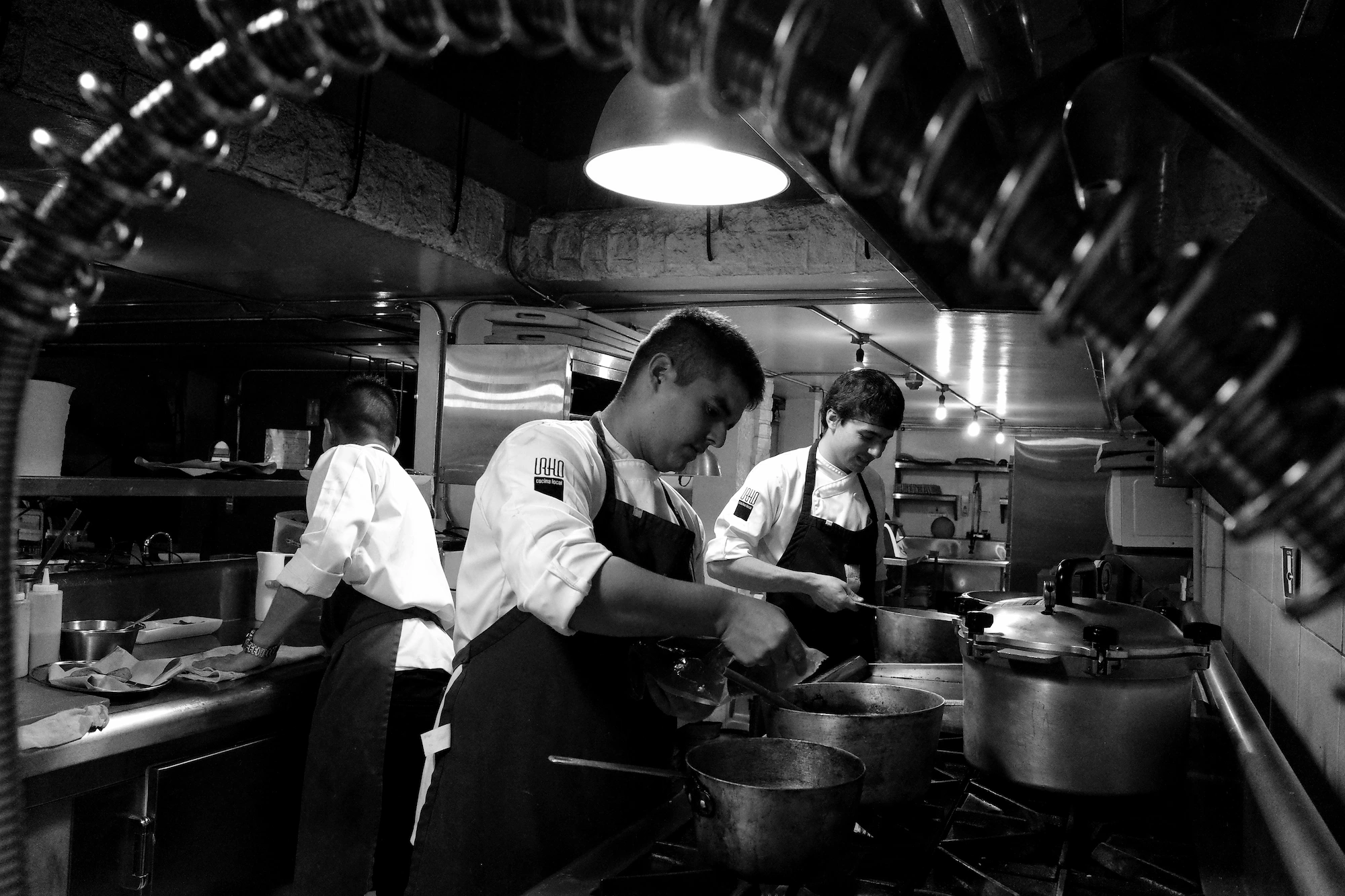
In a Michelin restaurant, you're plating 100+ covers a night. You're working with a brigade. The menu is fixed for the season. You repeat the same execution at speed, every night, for months. Technique is everything. The kitchen culture is built around hierarchy, repetition, and intensity.
In a private home, the volume drops to maybe six people. Sometimes three. Sometimes the chef is cooking for just the principal. The menu changes every day. The chef is often alone in the kitchen. They're handling breakfast, lunch, dinner, snacks, kids' food, sometimes staff food. All of it on their own shoulders.
The mindset has to shift. I told Stephan that the chef who spent 45 minutes dicing a tomato perfectly because that's what the restaurant required has to learn that in a family home, that time doesn't exist. The chef is one person. The day moves fast. You cannot afford the same ritual.
It can feel difficult for chefs because they're trained to do more. They want to show technique. They want to plate complexity. But the family might be asking for boiled chicken and steamed asparagus three times a week. And the chef has to deliver it with the same care as the most elaborate dish, because that's what the household wants.
I also gave Stephan a specific example. We have clients who hand the chef a family recipe or a carrot cake recipe they found online and ask the chef to produce it. In theory, easy. Recipe, ingredients, execute. In practice, it's surprisingly hard. Trained chefs are taught to look for errors in recipes, to make things better and faster, to bring eggs to room temperature, to substitute techniques. When a recipe is straight to the point and just wants to be followed exactly, some chefs struggle to just follow it.
Adjustment to private service usually takes a few years. The first few placements teach the chef what to do and what not to do. After enough time, the chef understands the game. It's different from restaurants, and the chefs who succeed in private service are the ones who genuinely make the mental shift.
Stephan asked me to walk through the cost structure. I'll repeat what I said on the podcast because the numbers matter and they're often misunderstood.
If a chef works exclusively for one family, there's a premium. The chef isn't going to work for other families. They're at the household's service, on call when needed. So full-time placements cost more than a few days a week, predictably.
I gave Stephan the working ranges for New York specifically, because that's the market most of his listeners would relate to: salaries start around $165,000 per year for an experienced private chef, plus benefits, plus packages, and run all the way to $300,000+ per year for a highly specialised chef with longevity, experience, and the right credentials.
That's just the headline number. The full picture includes:
For families who want to model their specific situation, we built a private chef salary calculator based on real placement data. It covers the major markets and lets you input the role specifics to get a realistic range.
If you'd like the full breakdown of what a private chef really costs, including the hidden expenses most principals don't budget for, I covered it in detail in my recent guide on private chef cost.
Stephan asked how chefs maintain consistency across multiple residences. This is where the role becomes much more than just cooking.
I gave him a specific example from a recent placement. A family based in New York with secondary residences in Florida and California. The family follows a gluten-free, dairy-free protocol with strictly organic produce.
What happens when the family moves between residences? The chef often travels a day ahead. They arrive at the second residence, go to the suppliers, and restock the entire kitchen before the family arrives. They source the specific juice brands the principal likes. They make sure the right cereal is in the pantry. They find the morning fruit the principal eats every day.
The chef in this kind of placement isn't just cooking. They're operating at the level of a butler or house manager. They anticipate. They prepare. They make sure the kitchen is ready before anyone notices it needs to be.
Consistency across cities is harder than people realise. The chef in New York can source one way. The chef in California might not find the exact same suppliers. But the family trusts the chef to suggest alternatives. The relationship is built on years of seeing the chef solve these problems well.
This is why multi-residence travel placements command 15 to 25 percent more in compensation than single-residence placements. The role demands logistics, judgment, and sustained relationships across cities. Not every great chef can travel well. The chefs who can are worth the premium.
Stephan asked at the end what I'd want first-time clients to take away from the conversation. My answer was specific and I want to repeat it here because it matters more than most search advice.
The UHNW private chef market is small. The chefs who specialise in this kind of residence are an even smaller subset. The good ones who are genuinely available don't stay unemployed long.
When my agency presents a candidate, we've already filtered hard. The profile and resume tell part of the story, but they don't tell all of it. There are reasons we recommend a specific chef that aren't immediately obvious from the paperwork.
So my advice to principals and family office managers is this: when we suggest a candidate, take the 10 or 15 minutes for a call before you turn them down on paper. Even if you're busy. Even if the profile doesn't look exactly like what you imagined.
Quite often a quick conversation reveals that the chef we selected is exactly the right fit for the role, in ways the resume doesn't show. We see the placement side and the chef side. We know which chefs adapt well to which households. The judgment behind a recommendation usually only becomes clear in a conversation, not on paper.
The principals who trust this process tend to make better hires. The ones who reject candidates on the resume alone often run searches that take three times longer than they need to.
I appreciated Stephan giving me the space to walk through the realities of this work. Most public conversations about private chefs are either glossy lifestyle pieces or platform-driven content from app-based services. Neither describes the world I've lived in for nearly two decades.
If you'd like to listen to the full episode (which also covers structured family financial support and cash balance plans for consultants), it's available on the Scholar Wealth Podcast page.
And if any of the topics in the conversation matched something you're working through (whether you're considering a first chef, replacing a chef who didn't fit, or scoping a multi-residence travel placement), schedule a confidential consultation and we'll walk through your specific situation.
Chris Demaillet is the Founder of Montclair Chef, a chef-founded private chef placement agency for UHNW families, family offices, and estates, headquartered in Mallorca with operations in the US, UK and Europe.
Michelin-trained under Michel Roux OBE, Chris spent nearly 10 years as personal chef to Amancio Ortega (founder of Zara) aboard the 70m M/Y Drizzle, and has cooked for billionaire industrialists, Middle Eastern royal families, a British Lord, and American tech principals across more than 25 years in private service.
He is the author of The Private Chef Guide (2026) and The Yacht Chef Guide (2020).
Read Chris's full story or schedule a confidential consultation.

Can you hire a chef from your favourite restaurant or a Michelin-starred kitchen as your private chef? Yes, here is what it really takes to make it work.
After 15 years running the world's largest private chef communities, here is how we reach the best chefs.

Resume gaps, Michelin claims that don't hold up, three families in two years, social media leaks. Five red flags that disqualify a private chef candidate.
Our expertise lies in understanding the unique needs of UHNW households and lifestyles. If you are ready to explore how a dedicated culinary professional can elevate your experience, we invite you to contact us for a confidential consultation.