


September 19, 2026

Reading

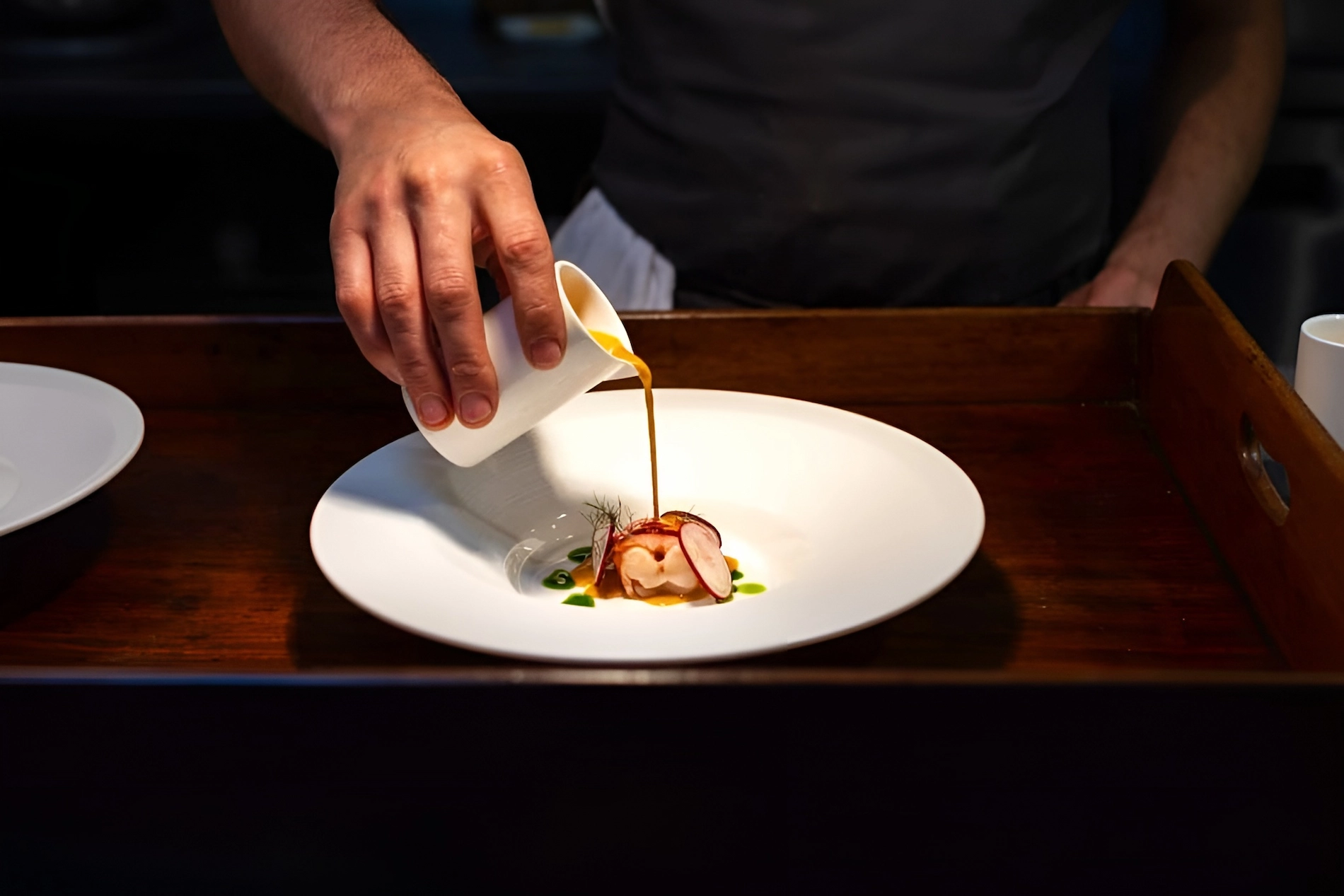
Written by Chris Demaillet, Founder of Montclair Chef. Over the past 18 months, the requests coming into our agency have shifted in a way I've never seen before. Here's what's happening.
For most of my career as a private chef, food was about pleasure first, nutrition second. The principal wanted a beautiful plate. They wanted memorable flavours. They wanted entertainment. Whether the dish supported their long-term health was, frankly, a secondary concern.
That has changed completely in the past 18 months.
The majority of the placement enquiries we now receive at Montclair Chef mention some version of the same brief: the family wants a chef who can cook for health, not just for taste. They want longevity protocols. They want supplement integration. They want anti-inflammatory frameworks. They want food that performs.
This is the single biggest shift in the UHNW culinary market I've witnessed in nearly 20 years of working in it. Here's what's driving it, what the role actually involves, and what to look for if you're considering hiring this kind of chef.
The role of the private chef has changed. The chef who cooks beautifully but doesn't understand longevity protocols is increasingly being passed over. Food is now part of the family's health strategy, not separate from it.
Over the past 18 months, almost every UHNW family that approaches us mentions at least one of the following:
These aren't fringe requests anymore. They're mainstream at the UHNW level. A few years ago, a principal asking for "anti-inflammatory meal planning" was unusual. In 2026, a principal NOT asking for it is unusual.
Three things, in roughly this order.
When tech founder Bryan Johnson launched his Don't Die protocol and went public with the specifics of how he spends roughly $2 million per year on his own health, something changed in the UHNW conversation about food.
Whether you take Johnson seriously or find him controversial, his transparency forced a question into the open: if a single tech founder can spend $2 million per year on a longevity stack and document every detail of it, what should other UHNW principals be doing?
The answer most of them have landed on is: more. More biomarker tracking, more supplement coordination, more attention to the food itself. And the kitchen is where most of that gets executed.
In February 2026, Johnson launched the Immortals program, an exclusive $1 million-per-year membership for three principals to follow his exact protocol. Over 1,500 people applied in the first 30 hours. Some of them are people my agency works with.
That tells you everything about where the market is right now.
Bryan Johnson is the most visible, but he's not alone. Peter Attia's work on longevity. Andrew Huberman's protocols on sleep, light, and metabolic health. Function Health and Hone Health on continuous biomarker tracking. Whoop and Oura on sleep and recovery.
The UHNW principal who reads Attia's Outlive, listens to Huberman's podcast, and runs quarterly biomarker panels through Function Health is now the norm, not the exception. And every one of those inputs eventually lands on the same question: what's on the plate, and is it serving the protocol?
The traditional UHNW health model was reactive. Annual physicals, the best doctors when something went wrong, premium care when needed. The 2026 model is the opposite. Continuous monitoring, daily intervention, preventive optimisation built into ordinary life.
Food is the highest-frequency intervention in anyone's life. You eat three times a day, every day, for the rest of your life. If you can optimise even a portion of that, the compounding benefit over decades is significant. The principal who understands this hires a chef who can execute against the framework.
This is a different job than a traditional private chef. The cooking is the easy part. The harder part is everything around it.
Most UHNW principals at this level work with a dedicated nutritionist or longevity physician. The chef isn't designing the framework. They're executing against one designed by someone else.
This means the chef has to:
A chef who treats the nutritionist as a constraint will fail. A chef who treats the nutritionist as a creative partner will succeed.
Many longevity protocols require supplements taken with specific meals or specific macronutrient ratios. Omega-3s with fatty meals. Certain vitamins with protein. Others on an empty stomach.
The chef coordinates with the supplement schedule. They time meals so supplements absorb properly. They communicate with the principal about which supplements should land at which moment.
This isn't part of culinary training. It's part of the modern UHNW chef job.
A growing number of principals wear continuous glucose monitors. They want to know how each meal affects their blood sugar. They have specific protein targets per meal (often 30 to 50 grams) to support muscle protein synthesis.
The chef who can plate a 35-gram-protein breakfast that doesn't spike glucose, while still making it look like food a human wants to eat, is rare. We pay premium compensation for that specific skill.
UHNW principals following longevity protocols often care deeply about ingredient sourcing. Glyphosate-free produce. Wild-caught versus farmed. Grass-fed and grass-finished. Low-mercury fish. Organic when it matters, conventional when it doesn't.
The chef who can navigate these tradeoffs intelligently, source from the right suppliers in each city the family lives in, and adjust based on regional availability is doing real work that doesn't show up on a CV.
Most longevity protocols are designed for the principal first. But the principal has a family. The chef has to deliver:
Doing this from one kitchen, three times a day, every day, requires planning skill that most restaurant chefs don't develop because they're not asked to.
When the family flies from Monaco to New York to Los Angeles, the protocol doesn't pause for jet lag. The chef has to maintain dietary continuity across time zones, supplier networks, and kitchens with different equipment.
This is one of the hardest parts of the role. The chef arriving in a new city at 2pm needs to have a meal ready by 7pm that hits the same macro targets, with the same ingredient quality, using suppliers they may not have used before. The chefs who do this well are worth their full compensation premium.
The shortlist of qualifications I look for when an agency search lands on a health-focused brief:
Demonstrated experience working with nutritionists or longevity teams. Not a one-off project. Sustained collaboration over multiple placements.
Clinical literacy. The chef should be able to read a macro breakdown, a CGM printout, or a Function Health blood panel and understand what it's telling them. Not diagnose, but understand context.
Restraint in plating. A chef trained in traditional fine dining sometimes resists the simplicity that longevity protocols require. The chef who can make a piece of wild salmon, broccoli, and lemon look beautiful and finish a meal that hits the protocol is more valuable than the chef who can plate 14 elements but can't simplify when needed.
Travel adaptability. Multi-residence families need a chef who maintains the protocol across cities and countries. This filters out a lot of otherwise excellent chefs.
Communication and discretion. The chef will be in conversations about the principal's health that don't happen with traditional staff. NDA discipline matters, and so does the ability to talk about sensitive health topics professionally.
We maintain a separate bench of health and nutrition chefs precisely because the criteria are different from a traditional placement. The pool is smaller. The interviews go deeper. The references skew toward nutritionists and longevity teams as much as toward previous principals.
Health and nutrition chefs in 2026 command premium compensation, typically 15 to 30 percent above generalist private chef salaries in the same market. Working ranges:
For the specifics of any individual role, you can run the numbers through our private chef salary calculator.
I'll be honest about what I think comes next.
The protocols will get more specific. Bryan Johnson's Immortals program, with its dedicated concierge team and BryanAI 24/7 monitoring, is one version of the future. We'll see more concierge-style health programs serving UHNW families, and the chef will be one node in a multi-disciplinary team that includes the longevity physician, the nutritionist, the personal trainer, the sleep specialist, and the household manager.
The chef's job becomes execution within a system, not solo culinary direction. This is a meaningful change. Some chefs will adapt brilliantly. Others, particularly those trained purely in restaurant traditions, will struggle.
The chefs who win in this new market are the ones who genuinely care about the science, not just the cooking. They read the longevity literature. They understand why their work matters beyond the plate. They see themselves as part of a health strategy rather than a separate creative enterprise.
If you're a principal building this kind of household, the chef hire matters more than it used to. The wrong chef now isn't just a culinary problem. It's a protocol problem.
When a family reaches out to us for a health-focused placement, we spend significantly more time on the brief than on a traditional search. We need to understand:
Only then do we begin searching. The candidates we present are chefs who have actually done this kind of work, with verified references from the nutritionists and longevity teams they've worked alongside.
If you're considering bringing in a health and nutrition chef for your household, schedule a confidential consultation and we'll walk through your specific protocol, the right level of chef for the role, and what realistic compensation looks like for your situation.
The market has changed. The chefs who fit this new world exist. They just aren't easy to find without knowing where to look.
Chris Demaillet is the Founder of Montclair Chef, a chef-founded private chef placement agency for UHNW families, family offices, and estates, headquartered in Mallorca with operations in the US, UK and Europe.
Michelin-trained under Michel Roux OBE, Chris spent nearly 10 years as personal chef to Amancio Ortega (founder of Zara) aboard the 70m M/Y Drizzle, and has cooked for billionaire industrialists, Middle Eastern royal families, a British Lord, and American tech principals across more than 25 years in private service.
He is the author of The Private Chef Guide (2026) and The Yacht Chef Guide (2020).
Read Chris's full story or schedule a confidential consultation.
Can you hire a chef from your favourite restaurant or a Michelin-starred kitchen as your private chef? Yes, here is what it really takes to make it work.
After 15 years running the world's largest private chef communities, here is how we reach the best chefs.
Resume gaps, Michelin claims that don't hold up, three families in two years, social media leaks. Five red flags that disqualify a private chef candidate.
Our expertise lies in understanding the unique needs of UHNW households and lifestyles. If you are ready to explore how a dedicated culinary professional can elevate your experience, we invite you to contact us for a confidential consultation.